Autumn Budget 2026: Manufacturers need more than good intentions
Author: Richard Kingsbury, Managing Director
A week on from the Autumn Budget, one question remains: has the government done enough to make Britain a more competitive place to manufacture?
Energy security, reindustrialisation and innovation were key themes in this year’s announcement. While it’s encouraging to see Britain’s industrial future receiving greater attention, the gap between ambition and action remains.
As Make UK highlighted in its response, the Budget offers some welcome measures but fails to address the fundamental costs holding back manufacturing investment and growth.
And that’s where the real challenge lies.
Every additional pound spent managing operating costs is a pound that cannot be invested in new machinery, automation, skills or additional capacity.
The ambition is there. But are the conditions right for manufacturers to act on it?
How are we energising the industry?
Energy remains one of the biggest barriers to British manufacturing competitiveness.
How can UK manufacturers compete internationally when the cost of powering their operations puts them at a disadvantage before production has even begun?
The British Industrial Competitiveness Scheme (BICS) is a welcome step. From April 2027, more than 10,000 eligible manufacturers are expected to benefit from electricity bill reductions of up to 25%, alongside a backdated payment for eligible businesses.
But as Make UK rightly points out, most manufacturers will remain outside the scheme.
What about the businesses facing the same competitive pressures without access to that support?
Longer-term plans to reform electricity pricing are encouraging, but manufacturers need more than the promise of lower costs in years to come.
Backing British industry
The government’s renewed focus on aerospace, defence and advanced manufacturing sends a positive signal.
The proposed joint £2.5 billion, 10-year programme with Rolls-Royce to develop next-generation engine technologies is an encouraging example of long-term industrial ambition.
But reindustrialisation cannot be built around major programmes alone.
Manufacturers across the supply chain need the financial capacity to invest in their own growth. And the Budget presents a mixed picture.
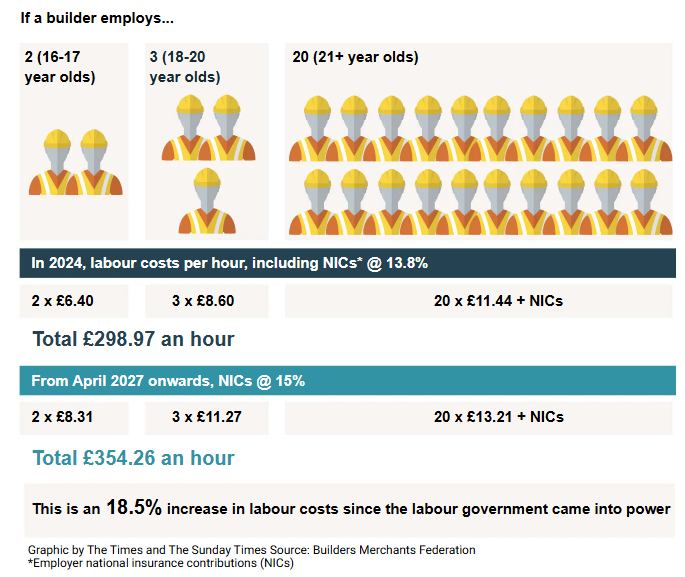
From April 2027, the National Living Wage will rise by 3.9% to £13.21 an hour. While supporting workers is important, manufacturers are also managing higher employment costs, with the employer National Insurance threshold remaining unchanged.
The Budget also increases the main-rate first-year capital allowance from 40% to 50%, offering some encouragement for investment in machinery. However, the reduction in the main-rate writing-down allowance from 14% to 12% could delay tax relief for businesses making larger, long-term investments.
Add ongoing skills shortages and concerns around apprenticeship funding, and the challenge becomes clear.
If we’re serious about improving productivity, shouldn’t we be making it easier for manufacturers to invest in the people and technology that deliver it?
AI, automation and advanced machining technologies have enormous potential to strengthen British manufacturing.
But innovation alone cannot overcome an environment where the cost of doing business continues to restrict investment.
Turning ambition into competitiveness
The Autumn Budget has recognised many of the right challenges. Support for energy costs, innovation, exports and strategic industries represents progress.
But recognising a problem and creating conditions to overcome it are two different things.
As Make UK’s response reinforces, manufacturers need more than individual schemes. They need a joined-up, long-term approach to energy, employment, skills and investment.
I believe we’re spending too much time encouraging manufacturers to innovate without doing enough to remove the barriers holding them back.
British manufacturers have the expertise, technology and ambition to compete on a global stage.
What they need is a fair chance to do so.
The real measure of this Budget won’t be how much the government promises British manufacturing. It will be whether Britain becomes a more competitive place to make things.