The Challenge:
Navigating Supply Chain Obsolescence to Maintain Mission-Critical Operations
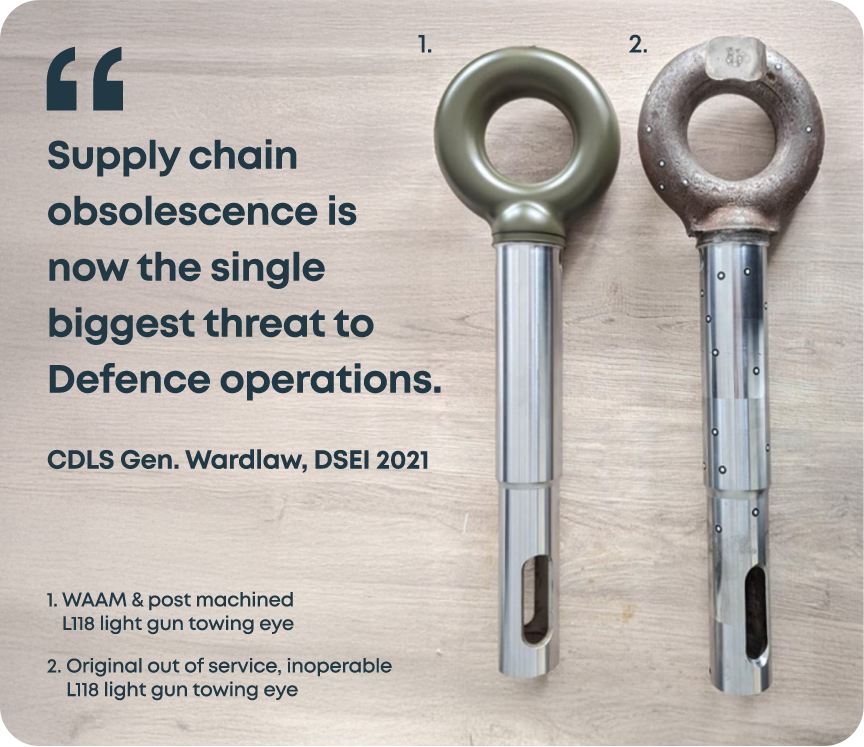
What happens when a high-value L118 light gun cannot be moved into position due to an out-of-service, worn towing eye with no current manufacturing supply chain to replace it?
The obsolete part with no drawings, material specifications, or manufacturing routing was selected as part of Project TAMPA led by Strategic Command Defence Support Babcock. The challenge was to fully re-engineer the towing eye to bring it back into service.
Since this was Babcock’s first time applying Wire Arc Additive Manufacturing (WAAM) for such an application, certification was critical. Dedicated testing and quality assurance validated that the part met all requirements and was fit for use.
What is Wire Arc Additive Manufacturing (WAAM) ?
- Wire Arc Additive Manufacturing produces a near-net shape ‘billet’ to replace forging or casting.
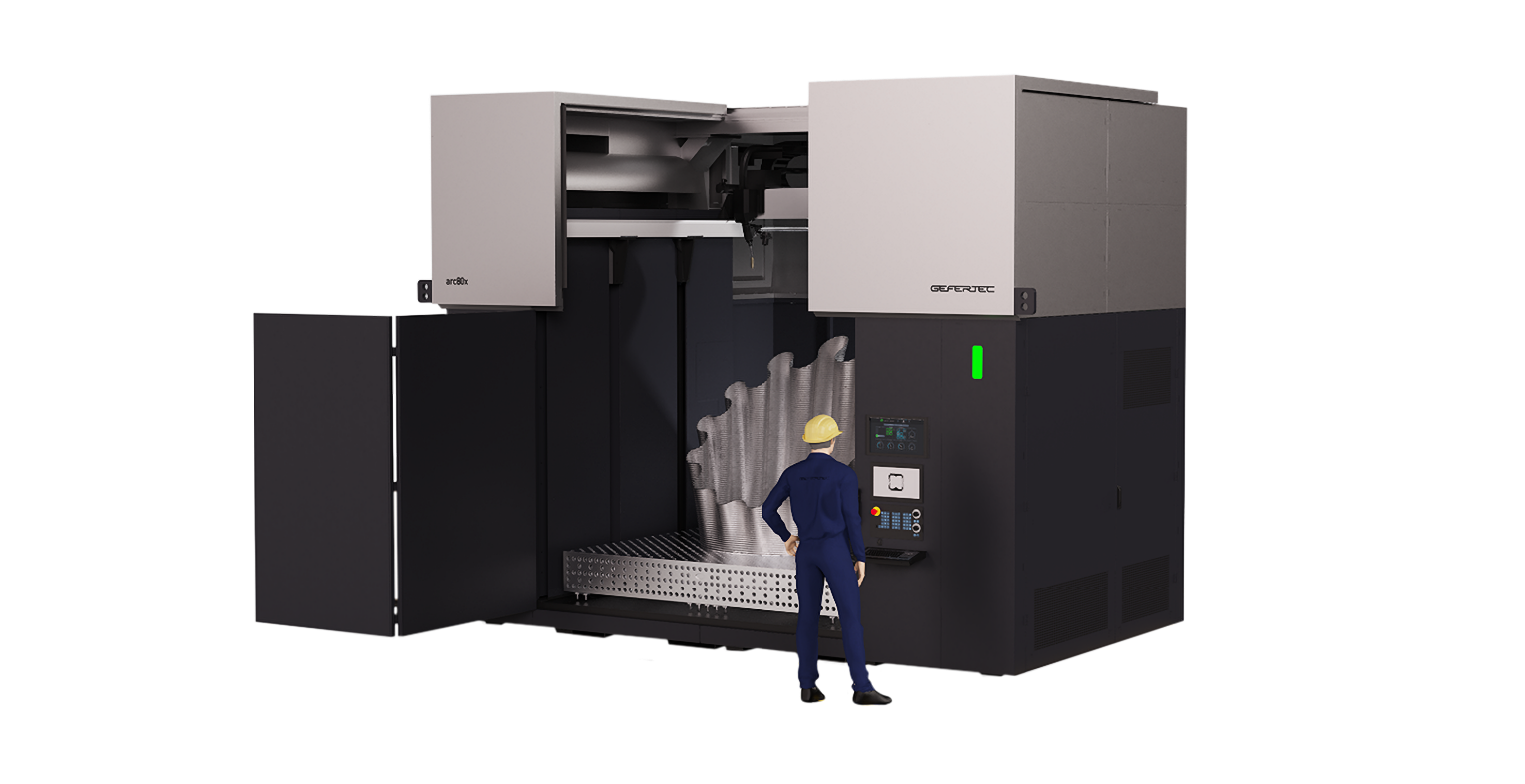
- A 3+2 gantry axis system makes parts up to 8m3.
- The GEFERTEC WAAM machine uses a MIG CMT process via a Fronius torch.
- Wire Arc Additive Manufacturing is a flexible material process, but typically requires post-machining to achieve the desired form and function.
The Solution:
Qualified Mission-Critical Components Using Wire Arc Additive Manufacturing (WAAM)

To overcome the manufacturing supply chain challenges, the solution involved a detailed technical process starting with geometrical scanning via Zeiss ATOS Q and CMM, and material analysis of the BS EN ISO 17025 accredited materials lab at Babcock Royal Devonport. This led to the generation of new design data, including CAD drawings and ITP (Inspection & Test Plan) to establish the manufacturing process.
A near-net shape blank was then manufactured using Wire Arc Additive Manufacturing (WAAM), followed by turning and 5-axis milling to achieve the final tolerances.
The final component, with a surface coating, was delivered to the end user in accordance with NATO Standards for towing components and EN10204 material conformity.

Discover the challenge, manufacturing process and results
Discover how Babcock used Wire Arc Additive Manufacturing (WAAM) to overcome supply chain obsolescence and re-engineer a mission-critical component for an L118 light gun.
The case study explores how scanning, material analysis, WAAM and precision machining were combined to recreate and qualify an obsolete towing eye, establishing a certified supply chain solution for future WAAM components.
Get in touch
If you have any questions about our machines, or interest in setting up a new machining process. Our expert team are more than happy to help.