The future of automation in manufacturing

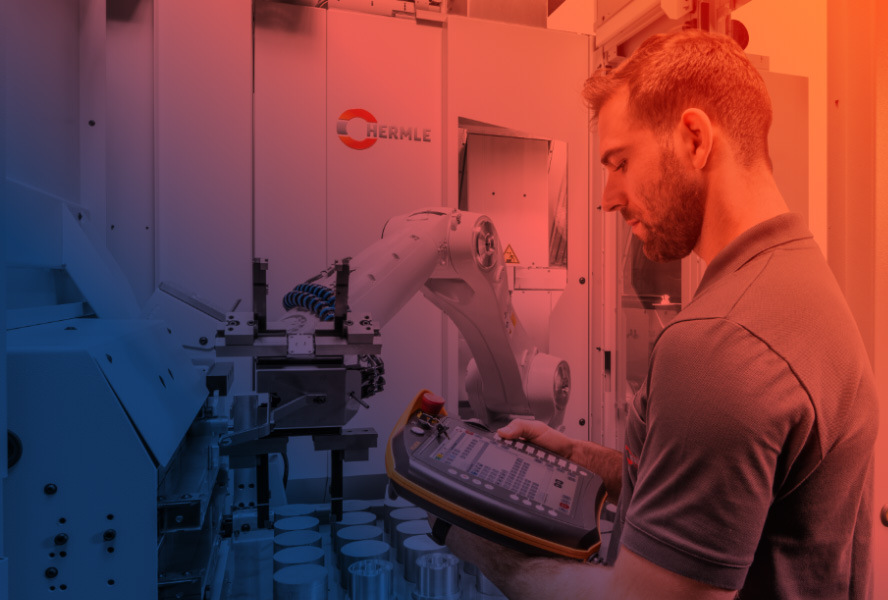
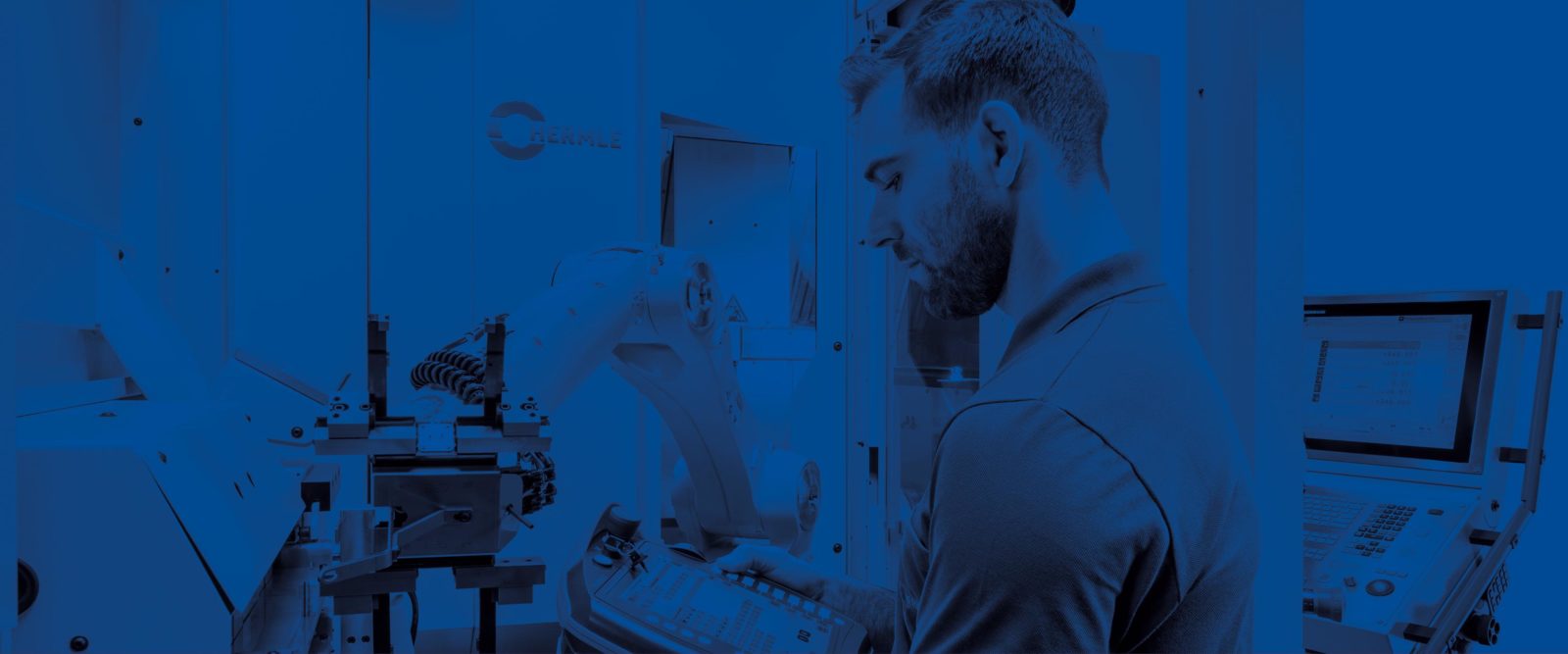
technician operating automated robotic arm

The next few decades will be an exciting time for the manufacturing industry as the pace of adoption for automation increases. In this article we’ll look at some key technologies that will build the foundation for the future of automation in manufacturing.

Why is automation essential?

Automation is essential for any manufacturer who hopes to remain profitable in the future. Much like the invention of the production line, automation is simply not a shift that can be ignored. 

In the decades to come, intelligent and machine-led manufacturing will become the norm. The role of people in the workplace has always evolved and will continue to do so. 

Those who embrace automation find increased productivity, profits, and safety, while reducing labour shortages, mistakes, and downtime.

Reshoring & Manufacturing automation efforts

Reshoring is on the rise, driven by geopolitical tensions, rising manufacturing costs, and increased demands for sustainability. 

Bringing production home, however, creates difficult roadblocks. 

For one, many nations face manufacturing workforce shortages. In the UK alone, 36% of manufacturing vacancies remain unfilled, making the prospect of reshored production less viable.

Automation provides some key solutions:

Augmented workforces

Intelligent software, robotics, and cobots can fill the gaps where the human workforce is missing. For example, with automated CNC machines, one machinist can oversee a number of machines that load and unload themselves, rather than having to focus on just one. 

However, this shift does require workers with strong digital skills and great problem solving. Upskilling is the key here.

Keeping costs low

One of the primary reasons manufacturers moved production abroad was to find lower production costs, primarily in Asia. 

For Western nations to match these costs in their own country, automation will be required. Automated processes drastically reduce downtime and errors, allowing manufacturers to operate around the clock and reduce cost-per-part. 

The race to automation: speed is key

Falling behind on the fourth industrial revolution could have catastrophic consequences for your manufacturing business.

Assume your competitors are exploring fully autonomous robots, powerful simulation software, and cloud-connected factories. Do the same, and you can ensure your business can keep up with the changes on the horizon. Keeping up is always easier than catching up, after all. 

Adopting automation quickly brings other benefits, too. Your customers and supply chain might begin looking for manufacturers who can promise automated processes, lower costs, and increased quality. 

Sustainability is another big benefit. Automated systems can monitor energy consumption, reduce waste, and find improvements to the supply chain in ways that people simply can’t—a benefit for you and your customers. 

Advanced robotics & automation

Typical industrial robots are blind and can seriously injure any human who gets too close, which is why they are typically enclosed behind fences. 

However, a new class of robots known as collaborative robots or cobots has emerged that can operate safely around humans without the risk of injury. 

What are cobots?

Cobots, or collaborative robots, are designed to work alongside humans on the same tasks. These systems need advanced sensors and software systems to accurately predict and interact with a human operator. As it turns out, human-robot symbiosis in manufacturing plants is 85% more productive than either element alone.

Another key advantage of cobots is their ease of programming. Traditional robots require highly specialised programmers to set them up effectively. 

Collaborative robots allow human operators to teach them to do a task. This teaching can be as simple as grabbing the robot and moving it manually to mimic an action. This allows workers to train their very own little helper who won’t complain or get tired. 

Lights-out manufacturing

Some factories can run more efficiently without human interaction. This is the case for plants where high rates of repetitive manufacturing occur or where the range of products manufactured is relatively small. 

These factories can theoretically be completely automated from the moment the raw materials are dropped off in the warehouse to the moment they are stored as inventory, taken to CNC machines, and set up. 

The manufacturing can take place, and the part can be removed and taken to an area for inspection and subsequent packaging. This entire process can happen without a human operator in sight.

Factories capable of 100% automation will be the gold standard of the manufacturing industry as they will generate impressive profits after all the machinery is paid off. 

Edge & Cloud computing

Automation is not just robots; it’s software, too. 

Manufacturers can leverage the power of edge and cloud computing together for incredible efficiency boosts. Here’s how it works:

  • Edge computing is the processing of data close to the source. In a factory, this would mean that monitoring or quality control equipment can make instant, real-time reactions to what’s happening on the shop floor.
  • Cloud computing is the opposite. Think of it as the heavy lifting – internet-based data storage and analysis tools that can pull information from your entire business to find improvements and trends. 

Industrial Artificial Intelligence & Machine Learning

AI will change all industries in ways that cannot even be predicted.

The true benefit of artificial intelligence in a manufacturing setup would be vast. Imagine a system that knows everything about the robots in a factory, a system that can make business decisions based on predicted raw material prices and manage the factory as close to its theoretical maximum productivity as possible.

The many unknowns faced when speaking of AI mean that its benefits cannot be seriously considered without making wild assumptions. 

Even today, machine learning algorithms provide manufacturers with a slew of benefits:

  • Supply chain management – Required stock levels can be determined by analysing demand forecasts. This will ensure that there are always enough raw materials to manufacture products.
  • Logistics – Returns can be automatically logged, evaluated and actioned with minimal human input. Dispatch and arrival times can be accurately calculated based on historical data. 
  • Predictive maintenance – Embedded sensors and general machine monitoring can be used to decide when a machine is about to break down. For example, a machine’s vibration can be monitored, and if any anomalous behaviour is detected, that vibration profile can be compared to a library of known failure modes, and an appropriate action can be chosen.
  • Data management and analyses – The factory of the future will be filled with sensors and monitoring equipment. These will produce a wealth of data that can be turned into actionable information. More radically, the data can be gathered, interpreted, and actioned without input from any human. This opens the door for a factory to autoregulate its operations to reach its predefined goals.

Ready to embrace the future of factory automation?

The natural progression of automation in manufacturing is always towards more automation. 

In coming years, automated factories won’t just be viable – they’ll be necessary. While today’s robots are very capable, the systems needed to make them operate in intelligent unison are a while off. 

This is why the future of automation in manufacturing will require a combination of advances in software and hardware. 

Our automation guide provides more information on how automation can benefit your company.

additive manufacturing in the automotive industry

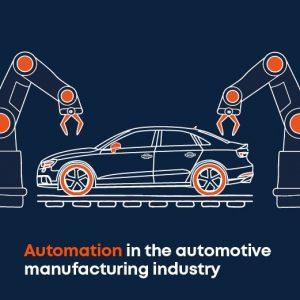
Does the future of automotive manufacturing lie in automation?

During the formative years of the automotive industry there was a h...
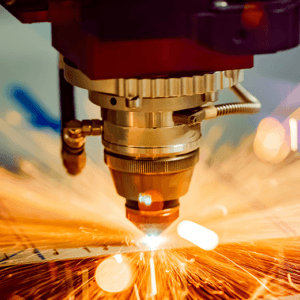
machining in progress

Why introduce automation in manufacturing?

Automation is not just the latest buzzword in manufacturing. It&#82...

Operative using Hermle Automation Control System

What is the Hermle Automation Control System, and how does it work?

More and more customers are calling on their suppliers to deliver e...

Leave us a message